NachrichtenBearbeiten
https://odysee.com/@ovalmedia:d/mwgfd-impf-symposium:9
https://totalityofevidence.com/dr-david-martin/
| | Kaum beachtet von der Weltöffentlichkeit, bahnt sich der erste internationale Strafprozess gegen die Verantwortlichen und Strippenzieher der Corona‑P(l)andemie an. Denn beim Internationalem Strafgerichtshof (IStGH) in Den Haag wurde im Namen des britischen Volkes eine Klage wegen „Verbrechen gegen die Menschlichkeit“ gegen hochrangige und namhafte Eliten eingebracht. Corona-Impfung: Anklage vor Internationalem Strafgerichtshof wegen Verbrechen gegen die Menschlichkeit! – UPDATE |
Libera Nos A Malo (Deliver us from evil)
Transition NewsBearbeiten
Feed Titel: Homepage - Transition News Neuer Plan: Trump will eingefrorenes iranisches Vermögen anzapfen
 Milliarden russischer Gelder liegen im Westen eingefroren – und bleiben weitgehend unangetastet. Bei den iranischen Vermögen will Trump kurzen Prozess machen. Irans Außenminister reagiert scharf. Beschlossen und beschwichtigt: Der neue Abrechnungsdeckel könnte jeden Patienten treffen
Über den Tarifdeckel-Entscheid wurde von den großen Schweizer Leitmedien nicht sehr ausführlich berichtet. Dabei betrifft er praktisch jeden (…)
Betreutes Überweisen: Ihre Bank entscheidet jetzt, wem Sie Geld schicken dürfen
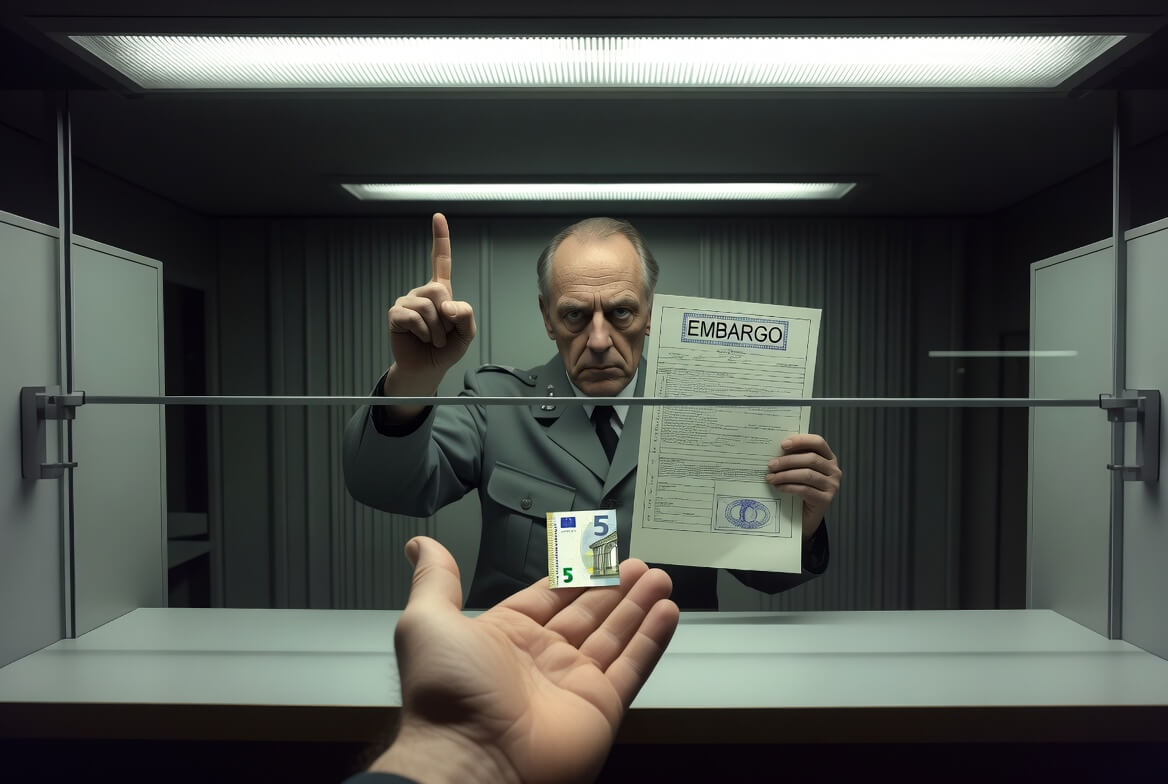 Fünf-Euro-Überweisung an einen Journalisten – und die Bank schickt eine Embargo-Meldung. Kein Einzelfall: GLS Bank, Volksbank. Wer auf der internen „Sanktionsliste" steht, bekommt kein Geld mehr. Wer solche Banken hat braucht keine Stasi mehr. Schweizer Neutralität unter Druck: Ein Prinzip, das sich immer wieder behaupten muss
Die Schweizer Neutralität erscheint heute oft als unverrückbare Konstante der Außenpolitik. Historisch betrachtet war sie jedoch stets Gegenstand (…)
Geheime Corona-Chats: Was die Öffentlichkeit nicht wissen sollte
 Neue Chatverläufe belasten die Autoren der wichtigsten Studie zum Corona-Ursprung. Was wussten Anthony Fauci und Christian Drosten wirklich? | Peter MayerBearbeiten
Feed Titel: tkp.at – Der Blog für Science & Politik Kernstücke der neuen WHO Verträge bringen Verlust der nationalen Souveränität der Mitgliedsstaaten
 Bekanntlich sollen bis Ende Mai Änderungen der Internationalen Gesundheitsvorschriften (IGV) beschlossen werden, die der WHO eine massive Ausweitung ihrer völkerrechtlich verbindlichen Vollmachten bringen sollen. […] Hardware-Schwachstelle in Apples M-Chips ermöglicht Verschlüsselung zu knacken
 Apple-Computer unterscheiden sich seit langem von Windows-PCs dadurch, dass sie schwieriger zu hacken sind. Das ist ein Grund, warum einige sicherheitsbewusste Computer- und Smartphone-Nutzer […] 25 Jahre weniger Lebenserwartung für "vollständig" Geimpfte
 Eine beunruhigende Studie hat ergeben, dass Menschen, die mit mRNA-Injektionen „vollständig“ gegen Covid geimpft wurden, mit einem Verlust von bis zu 25 Jahren ihrer […] Ostermärsche und Warnungen vor dem Frieden
 Ostern ist auch die Zeit der pazifistischen und antimilitaristischen Ostermärsche. Grund genug, um davor zu warnen. Tod nach Covid-Spritze: Ärzte im Visier der Justiz
 In Italien stehen fünf Ärzte nach dem Tod einer jungen Frau aufgrund der „Impfung“ vor einer Anklage. |
NZZBearbeiten
Feed Titel: Wissenschaft - News und Hintergründe zu Wissen & Forschung | NZZ
SERIE - Gesund altern: welche Check-ups die häufigsten Magen-Darmprobleme erkennen, bevor sie gefährlich werden
SERIE - Gesund altern: wie sich normale Veränderungen im Gehirn von einer Demenz oder Parkinson unterscheiden lassen
SERIE - Im Alter geraten die Hormone Cortisol und Insulin aus dem Takt. Welche Check-ups helfen, gesund zu bleiben
SERIE - Gesund altern: wie sich das Herz verändert und welche Check-ups sinnvoll sind
SERIE - Die Ursprünge der künstlichen Intelligenz: So lernten die Maschinen das Lernen
VerfassungsblogBearbeiten
Feed Titel: Verfassungsblog
FIFA’s Neutrality Trap
The World Cup in Canada, Mexico, and the United States came to an end yesterday. Beyond being one of the world’s biggest sporting events, the tournament also brought renewed attention to unresolved legal questions concerning freedom of expression in FIFA stadiums. The dispute over the historic Iranian Lion and Sun flag during Iran’s World Cup matches is a case in point. It raises the question of how far FIFA may go in restricting political symbols inside stadiums and what legal status fans have once they pass through the stadium gate.
Shortly before Iran’s opening match against New Zealand at SoFi Stadium in Los Angeles, Sam Kermanian and the Institute for Voices of Liberty petitioned the Los Angeles Superior Court to stop FIFA and related local actors from excluding spectators who displayed the historic Lion and Sun flag. The plaintiffs framed the flag as symbolic speech against the Islamic Republic and in support of democratic reform. FIFA and FWC2026 defended the restriction as a safety and admission policy for a private, ticketed event. Shortly before kickoff, Judge Curtis Kin denied emergency relief, leaving FIFA’s policy on political symbols in place. Bloomberg Law reported on the ruling and the disputed policy.
Underneath this specific dispute sits a broader tension. A World Cup fan enters the stadium in two capacities at once. As a ticket-holder, bound by FIFA’s venue code, security instructions and private access laws. And as a participant in a global public event, carrying identity, memory, nationality, dissent, and sometimes human-rights claims into one of the most visible spaces in sport.
The 2026 flag disputes expose the friction between these two legal identities. When fan expression matches FIFA’s official language of inclusion, the fan is treated as a rights-holder. When fan expression contests the official identity of a participating state, the same fan can be reduced to a ticket-holder subject to private stadium control. The ticket gives FIFA authority over access. Yet, it does not give FIFA a blank cheque to treat peaceful political expression as a threat.
The court’s refusal to intervene before kickoff exposes the institutional weakness of emergency litigation and, more importantly, the normative gaps in FIFA’s own speech policy. Judicial review cannot substitute for a rights-sensitive framework. Because FIFA effectively regulates expression in one of the world’s most visible public arenas, it should build its stadium speech rules through a transparent, rights-based process.
The Harder Free Speech Case
In his recent Verfassungsblog post, Daniel Rietiker rightly starts by drawing the line between hate speech and legitimate activism at the 2026 World Cup. Hate speech is incompatible with football and must be banned from stadiums. This includes racist chanting, antisemitic symbols, homophobic abuse, targeted intimidation and incitement to violence.
The harder question is peaceful political expression that can embarrass states, challenge official symbols or allow diasporic communities to contest who gets to speak for a nation. The Lion and Sun flag is none of the things hate speech is. It is not racist chanting, not homophobic abuse, not harassment of players, not a call to violence. It is, as the plaintiffs argued, a diasporic symbol of opposition to the Islamic Republic and support for democratic reform.
That does not mean FIFA must permit it in every size, location or circumstance. However, it does mean that the word “political” cannot end the legal inquiry on its own.
The Ticketed Fan
FIFA’s strongest argument for banning “political” symbols starts with the ticket. A World Cup match is not a public square. SoFi Stadium is access-controlled. Entry is conditional. Fans arrive through a contract formed by the ticket terms and the Stadium Code. Within that framework, FIFA can argue that access is governed by private venue rules rather than public-forum doctrine. Any serious free-speech argument has to concede the force of that point.
California law protects freedom of expression more broadly than the federal First Amendment in some private-property contexts, most famously in the PruneYard case. But a stadium behind a ticket gate is not a shopping center. FIFA may regulate objects that block views, obstruct exits, threaten spectators or create genuine risks of violence. Still, the private-law framework is incomplete on its own. The ticket is not a negotiated agreement between equals; it is a contract of adhesion. Fans either accept FIFA’s terms or lose access to one of the world’s most visible cultural events. The ticket is the legal gate through which the fan enters. It should not become the device through which FIFA strips fans of their public identity.
The Rights-Bearing Fan
FIFA cannot rely on private ordering alone, because its own institutional commitments point elsewhere. Article 3 of the FIFA Statutes commits FIFA to respecting all internationally recognized human rights and promoting their protection. FIFA’s human-rights materials tie that commitment to the UN Guiding Principles on Business and Human Rights.
This does not make FIFA a state actor under California law, and it does not erase venue safety or mean every spectator may bring every symbol into every match. But once FIFA claims to govern a rights-respecting World Cup, it cannot then treat stadium speech as a matter of contract, property and security alone. Fan expression needs to be assessed through a rights-based method.
That method involves identifying the expression and the legitimate aim for restricting it, establishing whether the restriction is necessary, assessing proportionality in relation to a specific risk, and applying the rule consistently. The UN Human Rights Committee’s General Comment No. 34 treats legality, legitimate aim, necessity and proportionality as core requirements for restrictions on expression.
FIFA’s current policy does not clearly meet this standard. FWC2026’s opposition quoted the relevant rule directly: ticketholders may not bring in banners, flags, flyers, apparel or other paraphernalia that are “political, offensive, and/or discriminatory.” The same policy also refers to discrimination based on protected grounds including political opinion, other opinions, sexual orientation and gender identity. That is the core legal problem. FIFA is not merely regulating objects. It combines different legal categories into one administrative label.
The Category Mistake
Political expression, offensive expression, discriminatory expression and operational risk are not the same problem. Discriminatory expression can target protected groups. Threatening expression can endanger players, officials or spectators. Harassing expression can create a hostile environment for identifiable individuals. Operationally unsafe material can block exits, obstruct sightlines, conceal objects or disrupt crowd flow. These are all legitimate concerns.
Peaceful political expression is a different matter. It may embarrass governments, divide spectators or complicate FIFA’s preferred image of harmony. But political discomfort is not the same as violence, discrimination, harassment or safety risk. U.S. free-speech doctrine, while not directly binding on FIFA as a private association, draws this line sharply. In Spence v Washington the flag display was treated as symbolic expression because the speaker intended to convey a message that was likely to be understood, given the circumstances. In Texas v Johnson the Court rejected suppressing an idea simply because it was offensive or disagreeable. Matal v Tam went even further and stated that causing offense itself is a form of expression.
None of these cases settles the Los Angeles dispute directly. But they identify the principles missing from FIFA’s rule. If the concern is obstruction, regulate the size and placement. If the concern is violence, identify threats or incitement. If the concern is discrimination, identify the protected group and the discriminatory content. What FIFA should not do is treat political meaning itself as the danger.
The policy also contradicts itself internally. It treats political opinion as both a protected ground and a prohibited stadium attribute. A fan’s political opinion may be exactly why that fan is vulnerable, especially when the expression contests an authoritarian state’s claim to represent the nation. A rule that protects “political opinion” from discrimination while banning “political” material without further analysis risks turning protection into pure discretion.
The Stadium Is Already Political
FIFA’s claim to neutrality rests on a fiction. The World Cup is not politically neutral. Official flags are displayed. Anthems are played. National teams appear as symbols of collective identity. State officials attend. Host governments provide infrastructure and security. Sponsors shape the visual landscape. Media narratives frame the event. FIFA does not remove politics by banning dissident symbols. It decides which politics count as part of the ordinary football identity.
This matters most when the participating state is authoritarian. International football lets states project unity. The official flag suggests the state, nation and people are one and the same. Diasporic and dissident symbols contest this claim. By permitting the official flag of the Islamic Republic while excluding a dissident Iranian symbol as “political”, FIFA is not keeping politics out of football. It is privileging state-approved politics. Neutrality becomes asymmetrical: official identity is normalized, dissident identity is risky.
Seattle and Los Angeles
The Egypt v Iran match in Seattle shows how unstable FIFA’s classification method really is. Despite objections from both Egypt and Iran, Human Rights Watch reported that FIFA allowed rainbow flags at the match. FIFA described the tournament as “an inclusive event that welcomes people from all backgrounds” and confirmed that rainbow flags and other flags representing sexual orientation and gender identity were permitted under the Stadium Code, provided they were used in accordance with the rules.
FIFA was right to do this. A federation’s objection because of cultural, religious or governmental discomfort cannot by itself transform peaceful expression of equality into a stadium danger. But precisely because FIFA got Seattle right, its handling of the Lion and Sun flag is even harder to justify. The two symbols are not identical. The rainbow flag signals equality and non-discrimination, while the Lion and Sun flag carries a different historical and political meaning: national memory, diasporic identity and opposition to the Islamic Republic. That difference does not answer the legal question though; if anything, it makes legal classification more necessary. Seattle shows that FIFA can resist state pressure and classify contested fan expression through a human-rights lens. Los Angeles shows the opposite approach: the dissident fan gets reduced to a ticket-holder, and anti-authoritarian national memory gets redefined as a risk to the stadium. The inconsistency is not only one of outcome. It is also an inconsistency of legal method.
A Better Neutrality Rule
FIFA does not need a politics-free stadium. That stadium does not exist. What it needs is a rights-sensitive neutrality rule. Such a rule should start with classification. Discriminatory abuse, racist symbols, antisemitic expression, homophobic harassment, targeted intimidation and incitement to violence can be prohibited outright. Operational risks can be handled through neutral rules on size, materials, poles, placement, exits, sightlines, fire safety and crowd flow. Peaceful symbols tied to identity, politics or history should be permitted unless FIFA can point to a concrete, non-discriminatory and proportionate reason to restrict them. This standard would not take control away from FIFA. It would discipline how FIFA uses that control by requiring it to name the actual problem, rather than reaching for “political” as a collective term.
Conclusion: Selective Recognition
The World Cup is not a parliament. It is not a protest square. But it is not a zone of silence either. It is a global public event where states, diasporas, corporations, fans and political memories all converge. That is why FIFA’s speech rules matter. They do not merely manage logistics. They decide which symbols count as inclusion, which count as national representation and which count as political risk. Seattle shows that FIFA can do better.
It can withstand state pressure and permit symbols that participating federations disapprove of, provided they express equality and dignity. Los Angeles shows that courts may simply be too late: by the time a fan reaches the gate, the legal relation has already been narrowed to ticket terms, private property, security discretion and emergency procedure. The problem with FIFA’s freedom of speech is not simply that it regulates fans. The problem is that it has no rights-sensitive method for deciding when fan identity becomes prohibited politics. That is not neutrality. It is selective recognition.
The post FIFA’s Neutrality Trap appeared first on Verfassungsblog.